
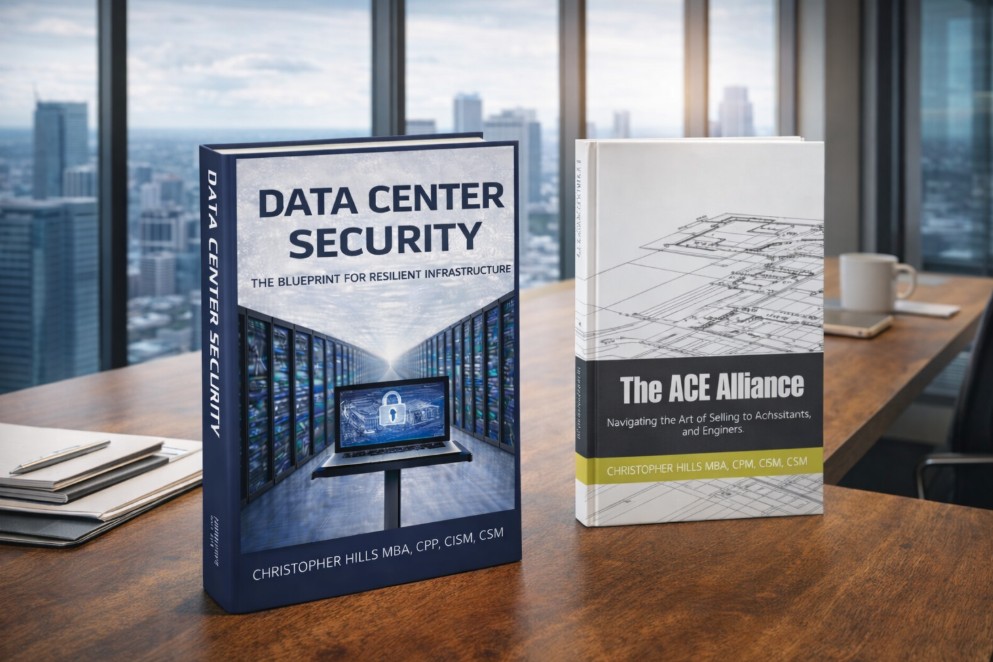
The strongest validation of any professional book comes from the people who work in the industry every day. Architects, consultants, engineers, security leaders, integrators, data center operators, and risk professionals have all shared their perspectives on the practical value these books bring to the field.
The ACE Alliance Accolades and Data Center Security Testimonials showcase feedback from professionals who understand the realities of selling into the A&E community and securing modern critical infrastructure. These are not theoretical endorsements. They come from practitioners responsible for real projects, real clients, and real operational risk.
For The ACE Alliance: Navigating the Art of Selling to Architects, Consultants, and Engineers, readers consistently highlight the book’s focus on relationships, trust, technical credibility, and long-term value creation within the A&E ecosystem. Professionals across the industry have described the book as a practical guide that finally explains how successful engagement with architects, consultants, and engineers actually works in the real world. The feedback reinforces one central theme: success in the ACE community is earned through understanding the design process, respecting technical stakeholders, and becoming a trusted resource instead of simply another salesperson.
As Michael S. D’Angelo, CPP, President of IAPSC member Secure Direction Consulting, stated, the book is “the guide the industry has been itching for.” Others emphasized how the material moves beyond transactional sales and instead focuses on building meaningful professional relationships that create long-term results. These endorsements reflect decades of combined industry experience from professionals who understand specification influence, design collaboration, and the importance of credibility inside the construction and consulting environment.
For Data Center Security: A Blueprint for Resilient Infrastructure, the response has been equally powerful. Readers from the security, critical infrastructure, and data center communities have recognized the book as a practical framework for addressing the rapidly evolving challenges facing hyperscale, colocation, enterprise, and AI-driven environments. The book combines physical security, cyber-physical convergence, governance, operational resilience, and infrastructure protection into a single operational perspective grounded in real-world experience.
Professionals have noted the book’s ability to connect executive strategy with operational reality, explaining not only how modern data centers should be protected, but why resilience must now extend from the grid to the rack. Readers have particularly responded to the book’s practical approach to layered security, infrastructure dependencies, operational governance, and the growing intersection between cybersecurity and physical security in critical environments.
Together, these books represent more than industry commentary. They reflect decades of field experience working with enterprise security programs, critical infrastructure, architects, engineers, consultants, hyperscale environments, and operational security teams. The feedback from peers and industry leaders reinforces the same message repeatedly: practical knowledge, operational realism, and relationship-driven leadership still matter in an increasingly complex technical world.
Whether the focus is navigating the ACE community or protecting the infrastructure powering the digital economy, the goal behind both books remains the same, providing professionals with practical guidance grounded in experience, strategy, and execution.
Additional information, reader feedback, and industry commentary can be found at: